Vetted Skincare Products for Combination Skin
Table of Contents
- Understanding Combination Skin and Product Selection
- Best Cleanser for Combination Skin
- Best Moisturizer for Combination Skin
- Best Skincare Routine for Combination Skin
- How to Start a Skincare Routine That Works
- Key Active Ingredients and Barrier Support
- Building Your Routine: Product Layering and Timing
- Frequently Asked Questions
Last Updated: October 18, 2026
Understanding Combination Skin and Product Selection
Combination skin presents a unique challenge: some areas are oily while others feel dry or tight. This dual nature means vetted skincare products for combination skin must balance hydration without heaviness and cleanse without stripping.
The key to managing combination skin lies in understanding your skin barrier. This protective layer of ceramides, cholesterol, and phospholipids keeps moisture in and irritants out. When compromised, combination skin tends to overproduce oil in some zones while becoming drier in others.
Selecting vetted skincare products for combination skin means looking beyond marketing claims. You need products that address specific concerns without creating new ones. A cleanser that's too harsh strips your skin barrier, triggering more oil production.
Best Cleanser for Combination Skin
A gel or low-foam cream cleanser is the safest default for combination skin, but the right pick depends on how your oily and dry zones behave after washing. The goal is a cleanser that removes sebum and sunscreen residue from the T-zone while leaving cheeks feeling comfortable, not tight, within 60 seconds of patting dry.
What to look for in the formula
- Surfactant system: Amino-acid surfactants (e.g., sodium cocoyl glycinate, sodium lauroyl methyl isethionate) and gentle glucosides clean effectively at a skin-friendly pH, typically around 5.0-6.0. Harsh sulfates like sodium lauryl sulfate strip the barrier faster and often trigger rebound oiliness.
- Barrier ingredients: Glycerin, ceramides, panthenol, and cholesterol help offset the inevitable lipid loss from cleansing. A cleanser does not need to repair the barrier, but it should not sabotage it.
- No fragrance or essential oils: These are common irritants for combination skin and add no cleansing benefit.
- Non-comedogenic labeling: Useful as a starting filter, though it is not a regulated guarantee, check the full ingredient list for heavy oils and butters if you are acne-prone in the T-zone.
Zone-by-zone application Most people do not need two cleansers. Instead, adjust contact time and pressure:
- T-zone (forehead, nose, chin): Massage for 20-30 seconds to lift oil and sunscreen.
- Cheeks and jaw: Use lighter pressure and rinse sooner, 10-15 seconds is often enough.
- Double cleansing: If you wear sunscreen or makeup, an oil-based first step followed by a gentle gel cleanser works well, but keep the oil cleanser brief on oily zones and emulsify fully before rinsing.
Cleanser types compared
- Gel cleansers: Best for oily-leaning combination skin; look for amino-acid surfactants and glycerin.
- Cream or milk cleansers: Better for dry-leaning combination skin; ensure they rinse clean and do not leave a film.
- Foaming cleansers: Convenient but variable, some high-foam formulas use drying surfactants. Check the ingredient list rather than the lather.
- Micellar waters: Useful as a first cleanse or morning refresh, but follow with a water rinse to avoid surfactant residue on dry cheeks.
Frequency guidance Twice daily is standard. If cheeks feel tight or flaky, reduce to a water rinse in the morning and a full cleanse at night. Over-cleansing is a common cause of the oily-but-dehydrated pattern that combination skin types mistake for pure oiliness.
When comparing products, weigh cost per ounce alongside surfactant quality, a $12-$20 gentle gel cleanser often performs as well as premium options, and the money is better spent on leave-on actives and sunscreen.
Best Moisturizer for Combination Skin
A lightweight gel-cream or lotion is the workhorse format for combination skin, but the best choice depends on whether your dry zones need occlusives and whether your oily zones tolerate them. The formula should hydrate without sealing the T-zone into congestion.
Format guide
- Gel-creams and lotions: Best all-around for combination skin. They rely on humectants (glycerin, hyaluronic acid) and light emollients (caprylic/capric triglyceride, squalane) with minimal occlusives.
- Rich creams: Reserve for cheeks and jaw if they flake, or for nighttime use in winter. Apply sparingly or skip on the T-zone.
- Occlusive balms: Generally too heavy for combination skin except as a spot treatment on dry patches.
Ingredient roles and realistic expectations
- Hyaluronic acid and glycerin: Draw water into the upper skin layers. Apply to damp skin to maximize benefit; in low-humidity conditions, follow with a light emollient to prevent moisture loss.
- Ceramides, cholesterol, and fatty acids: Support barrier repair. A moisturizer containing all three in a balanced ratio is a reasonable choice for compromised or sensitized combination skin.
- Niacinamide: Helps regulate sebum and supports the barrier. Most skin tolerates 2-5%; higher concentrations are not automatically better and can sting sensitive cheeks.
- Squalane and light plant oils: Provide emollience without heavy occlusion. Avoid coconut oil and heavy butters on acne-prone zones.
Zone-by-zone application
- T-zone: A thin layer of gel-cream is usually enough. If you are oily, apply after serum while skin is still damp and stop there.
- Cheeks and jaw: Apply a slightly thicker layer, or add a second layer after the first absorbs. In cold or dry conditions, a richer cream on these areas only is reasonable.
- Around the eyes and mouth: These areas often need more emollience; a small amount of a richer product here will not congest the T-zone.
AM versus PM Morning moisturizer should sit well under sunscreen, a gel-cream that absorbs in 2-3 minutes is ideal. Evening moisturizer can be slightly richer to support overnight barrier repair, especially if you use retinoids.
Common mistakes
- Skipping moisturizer on oily zones: dehydrated skin often produces more oil, so a light layer across the whole face usually helps.
- Layering too many humectants: three hydrating serums plus a moisturizer can leave a tacky film and pill under sunscreen.
- Choosing a cream based on marketing for "dry skin" when only the cheeks are dry, zone-specific application solves this without buying two products.
Price does not reliably predict performance here. A $15-$25 fragrance-free gel-cream with glycerin, ceramides, and niacinamide covers most combination-skin needs; premium creams are worth it mainly if you want a specific texture or additional actives.
Best Skincare Routine for Combination Skin
An effective best skincare routine for combination skin follows a simple morning and evening sequence that respects your skin barrier while addressing oiliness and dryness.
Morning Routine:
- Cleanse with a gentle gel cleanser
- Apply a hydrating toner or essence (optional but helpful for barrier support)
- Apply a lightweight moisturizer
- Use sunscreen (essential for barrier protection and preventing irritation)
Evening Routine:
- Cleanse with the same gentle cleanser
- Apply a treatment serum or active ingredient (retinoid, vitamin C, or hyaluronic acid)
- Apply a slightly richer moisturizer than morning
- Use a targeted barrier repair product if needed
The best skincare routine for combination skin avoids complexity. Three to four products, cleanser, moisturizer, sunscreen, and one active, handle most needs. Additional products should address specific concerns like sensitivity or acne, not just add steps.
Consistency matters more than product count. Using the same routine for at least four weeks allows your skin barrier to stabilize and reveals whether products are actually working. Many people switch routines too frequently, preventing their skin from adjusting.
How to Start a Skincare Routine That Works
Starting a routine requires understanding your baseline skin condition, not guessing based on appearance.
Step 1: Assess Your Skin Honestly Observe your skin for one week without any active treatments.
Step 2: Start With Cleanse and Moisturize Begin with only a cleanser and moisturizer suited to combination skin. Use these consistently for two weeks.
Step 3: Introduce One Active at a Time Add a single active ingredient, retinoid, vitamin C serum, or gentle exfoliant, and wait two to four weeks before adding another.
Step 4: Layer Thoughtfully Understand how to start a skincare routine that works by respecting product order. Water-based serums apply before oils and creams. Actives like retinoids apply to clean, dry skin.
Key Active Ingredients and Barrier Support
Vetted skincare products for combination skin should contain proven active ingredients that address your specific concerns without compromising barrier function.
Retinoids and Retinol Retinoid products increase cell turnover and support collagen production. Start with low concentrations (0.25-0.5% retinol) and use only 2-3 times weekly initially.
Vitamin C Serum Vitamin C provides antioxidant protection and brightens skin tone. Stabilized forms like L-ascorbic acid penetrate effectively.
Hyaluronic Acid This humectant draws moisture into the skin and supports hydration without adding weight.
Ceramides and Cholesterol These lipids form the foundation of barrier repair.
Niacinamide Also called vitamin B3, niacinamide regulates sebum production and supports barrier function.
Building Your Routine: Product Layering and Timing
Proper product layering ensures each ingredient penetrates effectively and doesn't interfere with others. The general rule: apply thinnest products first, thickest last. Water-based products precede oil-based ones.
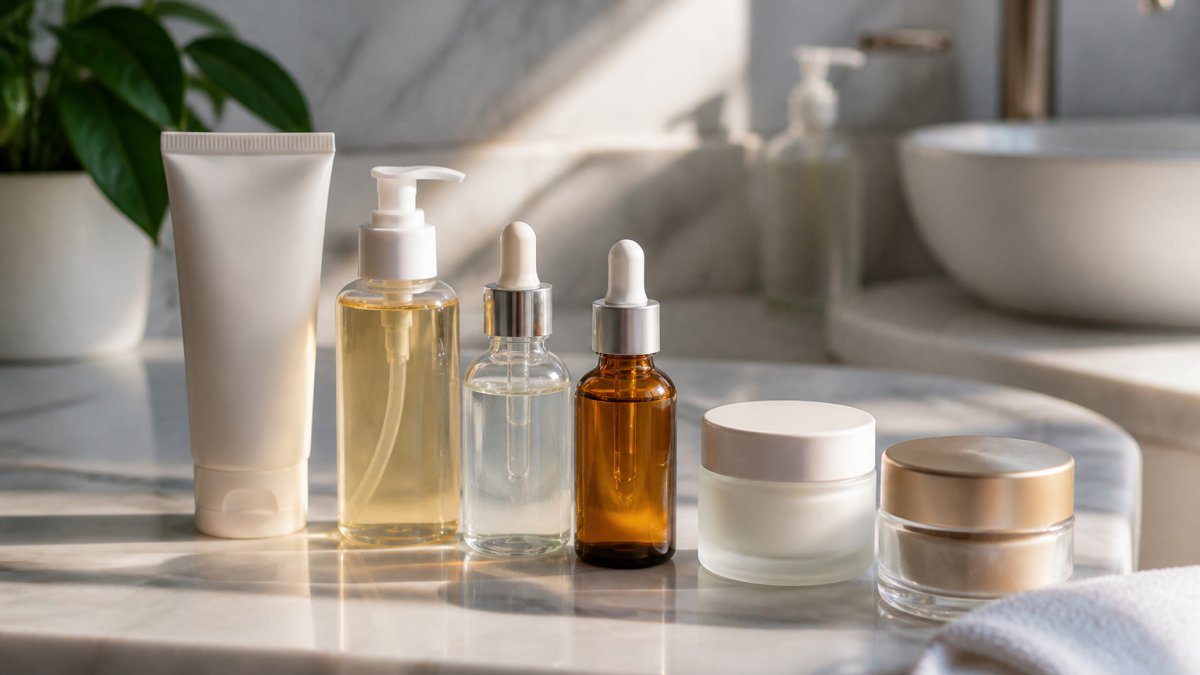
Application Order (Morning and Evening):
- Cleanser (removes impurities and excess oil)
- Toner or essence (optional; adds hydration)
- Serum (lightweight, active ingredients penetrate first)
- Moisturizer (seals in hydration and actives)
- Sunscreen (morning only; critical barrier protection)
Timing Between Products Allow each product to absorb before applying the next. Most serums need 1-2 minutes. Moisturizer absorbs within 3-5 minutes.
When using retinoids or other potent actives, apply them to completely dry skin. Wait 10-15 minutes after cleansing before applying a retinoid serum.
The best approach to vetted skincare products for combination skin is consistency over complexity. A simple routine performed correctly outperforms a complicated one done haphazardly. Most people see meaningful improvement within 6-8 weeks of consistent use.
Building an effective routine with vetted skincare products for combination skin requires patience and the right foundational products. Explore our skincare selection and discover how the right products can simplify your routine while delivering visible results. The American Academy of Dermatology's guide to skin barrier care provides additional clinical perspective on barrier support. Dermatology Times' research on combination skin management further supports these evidence-based approaches.
Frequently Asked Questions
What skincare is good for combination skin?
Combination skin needs a balanced approach: gentle, non-stripping cleansers that respect the skin barrier; lightweight hydrating serums with hyaluronic acid and antioxidants; and targeted moisturizers that hydrate dry zones without adding excess oil to the T-zone. Look for dermatologist-designed formulas with ceramides and phospholipids for barrier repair, and avoid heavy occlusives that clog pores. Layering different textures by zone, gel moisturizer on oily areas, richer cream on dry patches, gives you flexibility without switching entire product lines.
How do you build a simple skincare routine for combination skin?
Start with a gentle gel cleanser morning and evening to remove oil and impurities without stripping the skin barrier. Follow with a hydrating toner or essence if your skin feels tight. Apply a vitamin C or antioxidant serum to the entire face for protection and brightness. Use a lightweight moisturizer on the T-zone and a richer cream on dry areas. At night, add a retinoid serum 2-3 times weekly once your skin adapts. This four-step foundation, cleanse, treat, moisturize, protect, addresses both oiliness and dryness without overwhelming your routine.
Should combination skin use a gel or cream moisturizer?
Both. Use a gel moisturizer on your oily T-zone (forehead, nose, chin) to hydrate without congestion, and a richer cream on dry cheeks and around the eyes. This zoned approach gives combination skin the hydration it needs without trapping oil. Look for gel formulas with hyaluronic acid and lightweight humectants, and cream moisturizers with ceramides and cholesterol for barrier support. If you prefer one product, choose a lightweight lotion that works across both zones, then layer a richer cream only where needed.
What should you avoid using on combination skin?
Avoid harsh sulfate cleansers that strip the skin barrier and trigger excess oil production. Skip heavy oils and occlusive butters on oily zones, as they can clog pores and worsen breakouts. Don't use multiple active ingredients simultaneously when starting out, introduce retinoids, vitamin C, and exfoliants one at a time, weeks apart. Avoid products with fragrance or high alcohol content, which irritate sensitive areas and compromise the barrier. Don't over-exfoliate or use astringent toners that dry out already-compromised skin. Finally, resist the urge to treat oily and dry zones with completely different routines, which can destabilize your skin barrier further.