How to Test Skincare Before Buying: A Step-by-Step Guide
Quick Summary
To test skincare before buying, apply a small amount to a test area such as the inner arm or behind the ear for seven to 10 days. This patch test shows whether the product causes redness, itching or burning before you use it all over your face.
- Pick a test area like the inner arm or behind the ear.
- Apply a pea-sized amount once or twice daily for seven to 10 days.
- Watch for redness, itching, burning, swelling or rash throughout the test.
- Test only one new product at a time so reactions are easy to trace.
- Request a sample before buying a full-size product to reduce risk.
Table of Contents
- Why Patch Testing Matters Before You Buy
- How to Test Skincare Before Buying at Home
- Where to Do a Patch Test for Face Products
- How to Do a Patch Test for Face Serum
- How to Patch Test Skincare for Acne-Prone Skin
- Testing Before Purchase: Samples, Testers and Hygiene
- Booking Your First Tested Product at CanvasSkinLab
- Frequently Asked Questions
Before you buy a new facial serum, cream or cleanser, a short test on your own skin can save you a bad reaction and a wasted purchase. A patch test checks whether a product triggers redness, itching or burning on a small area first. This guide walks you through how to test skincare before buying, step by step.
According to American Academy of Dermatology guidance on testing skin care products, the usual approach is to apply a product to a small area of skin for seven to 10 days before using it all over your face. That single habit catches most problems early.
Why Patch Testing Matters Before You Buy
A patch test is a small trial on your skin. It shows how your skin responds before you commit to full use. Skin reactions such as contact dermatitis can appear hours or even days after first use, so a quick swipe on your hand is rarely enough (the American Academy of Dermatology).
The U.S. Food and Drug Administration states that cosmetics must be safe when used according to their labeling or customary use, as noted in FDA guidance on product testing of cosmetics. That is a general safety rule, though. It does not promise that a product will suit every person, which is why your own test matters.
How to Test Skincare Before Buying at Home
Use these steps at home before you use a product on your face:
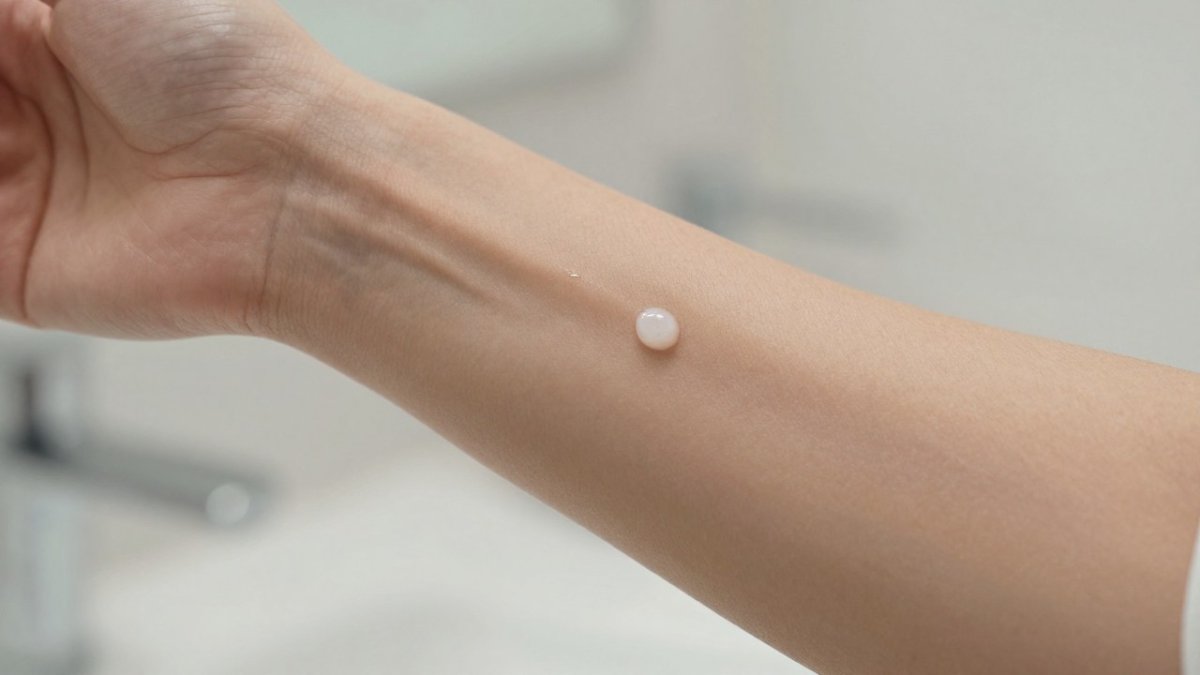
- Pick a test area. Choose the inner arm or behind the ear.
- Clean the spot. Wash with a gentle cleanser and dry it completely.
- Apply a small amount. A dot about the size of a pea is enough.
- Leave it on. Follow the product's instructions for how long it stays on.
- Repeat daily. Apply the same way once or twice a day for seven to 10 days.
- Watch for changes. Check for redness, itching, burning, stinging, swelling or rash.
If the test spot stays calm for the full period, the product is more likely to suit you. A negative test is not a guarantee, however, so stop use at any sign of a reaction.
The core steps for a home patch test are summarised below so you can follow them in order.
| Step | What to do | Time or frequency |
|---|---|---|
| Pick a test area | Choose the inner arm or behind the ear | Before first use |
| Clean the spot | Wash with a gentle cleanser and dry completely | Before each application |
| Apply a small amount | A dot about the size of a pea | Once or twice daily |
| Leave it on | Follow the product's instructions | As the label directs |
| Repeat daily | Apply the same way each day | Seven to 10 days |
| Watch for changes | Check for redness, itching, burning, swelling or rash | Throughout the test period |
Where to Do a Patch Test for Face Products
Test on skin that looks and behaves like your face. The inner forearm is a common choice, but it has thinner skin than your face. Behind the ear or along the jawline can give a closer match. Avoid broken, sunburned or freshly shaved skin, since these areas react more easily and can give misleading results.
How to Do a Patch Test for Face Serum
Serums often contain active ingredients, so they deserve more caution than a cleanser or a basic moisturizer. The goal is to learn how your skin responds to the formula before you apply it to your whole face.
Start smaller than you think. Apply a single drop to a small test area, behind the ear or along the jawline, and spread it thinly. Do not layer other products on top of the test spot during the trial, because a reaction to a second product will confuse the result.
Test one new product at a time. Introduce a new serum only after your current routine has been stable for at least a week. If you add a serum, an exfoliant, and a new moisturizer in the same week, you cannot tell which one caused a reaction. A simple approach is to change one product every seven to 10 days and keep everything else the same.
Match the test to the active. Different ingredients carry different risk profiles:
- Exfoliating acids (AHA and BHA): expect mild tingling, but burning that persists beyond a few minutes is a warning sign. Test at the lowest frequency the label allows, and do not combine the test with other exfoliants.
- Retinoids: irritation often builds over several days rather than appearing on the first application, so a one-day test is not enough. Test every second or third night and watch for peeling, redness, and stinging.
- Fragrance and essential oils: reactions can be delayed and may show up as itching or a rash rather than immediate redness. A negative first-day result does not rule out a reaction later in the test period.
- Prescription-strength products: do not self-test these. Follow the instructions from the prescribing clinician, and contact them if you develop a reaction.
Track what you see. Keep a short note of the date, the product, how much you applied, and any change in the test spot. A written record makes it far easier to tell a true reaction from a flare caused by weather, stress, or another product.
Know when to stop and seek advice. Stop using the product and contact a clinician if you develop swelling, blistering, a spreading rash, or difficulty breathing. For persistent redness or itching that does not settle after you stop, a clinician can help distinguish irritation from an allergy. A home patch test is a screening tool, not a diagnosis, and it cannot confirm a true allergy the way professional testing can.
Watch out: a negative result on a small spot does not guarantee the serum will be fine on your whole face or after weeks of repeated use, so introduce it gradually even after the test period ends.
How to Patch Test Skincare for Acne-Prone Skin
Acne-prone skin can react strongly to active ingredients, and irritation can look like breakouts. Test a new product on a small area for the full testing period before you use it on your face. If you already use a treatment, pause it while you test something new, so you can tell the effects apart.
Testing Before Purchase: Samples, Testers and Hygiene
Most patch-test guides assume the product is already in your bathroom. The harder question is how to test before you spend money. The answer is to treat samples and store testers as a short, structured trial rather than a quick sniff-and-swipe.
Ask for a sample before you commit to a full size. Many brands and retailers offer foil packets, sachets, or small deluxe samples. A useful rule of thumb: request enough for at least seven days of twice-daily use on a small test area, which is usually far less than a full-size bottle. If a brand will not provide a sample, that is useful information too, you are being asked to buy blind.
Use store testers hygienically or not at all. Open jars and shared pump bottles in a store are handled by many people, and fingers carry bacteria. If you want to try a tester, pump or squeeze product onto a clean tissue or a single-use applicator rather than dipping fingers into the pot. Avoid testers that are open jars with no spatula, and never apply a shared tester to your face in the store. A tester can tell you about texture, scent, and finish; it cannot reliably tell you whether the product will irritate your skin after repeated use.
Judge the sample like a mini purchase. Before you commit, assess more than irritation. Note how the product feels going on, whether it pills under sunscreen or makeup, how it layers with your existing routine, and whether the packaging dispenses a sensible amount. A product that passes a patch test but pills under your foundation is still a bad buy.
Watch out: a calm reaction to a single tester application in a store says almost nothing about a seven-to-10-day trial, so do not let a pleasant counter experience substitute for a real patch test at home.
Plan the purchase around the test. If you are ordering online, buy the smallest size available or a sample set first, and check the return policy before you open a full-size product. Keep the receipt and packaging until your test period is complete. That way a failed test costs you a sample, not a full jar.
Booking Your First Tested Product at CanvasSkinLab
Once your patch test is calm, you are ready to choose your next product. Browse the full skincare range to find options for your routine. If you are still building a list, our skincare product collection makes it easy to compare what you might try next.
At CanvasSkinLab, we want you to feel confident and cared for from morning to night. Start your patch test today, and shop with a plan. Explore CanvasSkinLab to find products that fit your routine.
Frequently Asked Questions
How long should you test a new skincare product before using it on your face?
The American Academy of Dermatology advises testing a product on a small area of skin for seven to 10 days before using it on the face. Apply it as the label directs, once or twice daily, and watch the test spot for redness, itching, burning, stinging, swelling or a rash. A clean test spot over that period is a useful signal, but it is a screening step rather than a guarantee that the product will never cause a reaction. If you notice a reaction, stop using the product and consider speaking with a dermatologist before trying it again.
Where should you patch test a face product?
Many people test on the inner arm or behind the ear, in a quarter-sized area of skin that is not broken or irritated. The inner arm is a common choice because the skin is thin and reactions are easy to see. Testing behind the ear can be more relevant for facial products since the skin is closer in type to the face. Whichever spot you choose, keep it consistent for the full test period so you can compare how the skin looks day to day.
Can you test skincare products in a store before buying them?
Some stores and beauty counters offer testers, and you can often apply a small amount to the inner arm or hand to see how the skin responds in the short term. A store test is limited, though, because a reaction may take days to appear. Use testers for a first impression only, avoid applying tester products to broken skin, and ask for single-use samples where possible. For a full evaluation, continue with a multi-day patch test at home after purchase or sample use.
What should you do if a skincare product causes irritation during a patch test?
Stop using the product immediately and wash the test area with mild soap and water to remove any remaining product. Monitor the area for redness, itching, burning or swelling. If symptoms are mild and fade within a day or two, the product is likely not suitable for your skin. If you develop a rash, blistering, swelling of the face or lips, or irritation that worsens, seek medical care promptly. A dermatologist can help determine the cause of a reaction through professional allergy testing.