Article: Clinical Skincare Ingredients for Beginners
Clinical Skincare Ingredients for Beginners
Last Updated: October 23, 2026
Quick Summary
Clinical skincare ingredients are scientifically-formulated compounds designed to address specific skin concerns with measurable efficacy, backed by dermatological research and formulated at therapeutic concentrations with optimal pH for absorption. The four foundational clinical skincare ingredients beginners should know are hyaluronic acid for hydration, ceramides for barrier support, vitamin C for antioxidant protection, and retinol for collagen stimulation.
- Hyaluronic acid can hold up to 1,000 times its weight in water, making it one of the most effective hydrating ingredients available.
- Start with low-concentration actives: 5-10% AHA, 0.5-2% BHA, or 0.25-0.5% retinol used 2-3 times weekly.
- Never combine retinol with AHAs, BHAs, or vitamin C in the same routine as the combination causes excessive irritation.
- Most clinical skincare ingredients require 6-12 weeks of regular use to show visible results.
Table of Contents
- What Are Clinical Skincare Ingredients and Why They Matter
- The Core Clinical Ingredients Every Beginner Should Know
- How to Read Skincare Ingredient Labels
- Active Ingredients: AHAs, BHAs, and Retinol
- Skincare Ingredients to Avoid Mixing
- Patch Testing Skincare Products: A Beginner's Guide
- Building Your First Clinical Skincare Routine
- Frequently Asked Questions
What Are Clinical Skincare Ingredients and Why They Matter
Clinical skincare ingredients are scientifically-formulated compounds designed to address specific skin concerns with measurable efficacy.
The skincare ingredients market was valued at USD 22.80 billion in 2025 and estimated at USD 24.10 billion in 2026, with a projected compound annual growth rate of 5.9%, according to Global Market Insights market analysis. This growth reflects a fundamental shift in how consumers approach beauty. More than half of consumers now prefer skincare products made from natural or organic ingredients, yet the real driver of results isn't whether something sounds natural, it's whether the ingredient actually works.
At CanvasSkinLab, we understand that beginners often feel overwhelmed by ingredient lists, marketing claims, and conflicting advice.
The difference between clinical skincare and conventional beauty products comes down to concentration, pH balance, and evidence. A clinical ingredient is typically present at a therapeutic concentration, high enough to create measurable change.
The Core Clinical Ingredients Every Beginner Should Know
These four ingredients form the foundation of effective clinical skincare. Each addresses a fundamental skin need, and each has strong evidence behind it.
Hyaluronic Acid and Hydration
Hyaluronic acid is a humectant, a molecule that binds water to the skin and holds it there. A single molecule of hyaluronic acid can hold up to 1,000 times its weight in water, making it one of the most effective hydrating ingredients available.
For beginners, hyaluronic acid is the safest starting ingredient. It's non-irritating, works well with almost everything, and delivers visible results within days. Apply it to damp skin, the moisture it binds is crucial, then follow with a moisturizer to seal it in.
The key to hyaluronic acid is layering. Water-based serums with hyaluronic acid should be applied first, before heavier creams or oils, so the hydrating molecule can penetrate effectively.
Ceramides and Barrier Support
Your skin barrier is a lipid-rich layer that prevents water loss and protects against environmental damage. Ceramides are lipids (fats) that naturally occur in your skin.
Ceramides come in three main types: ceramide 1, ceramide 3, and ceramide 6-II. Look for products that list ceramides early in the ingredient list, indicating higher concentration. Ceramides work best when paired with other barrier-supporting ingredients like cholesterol and fatty acids. Products listing "ceramide complex" or "lipid complex" typically contain this combination.
For beginners, a ceramide moisturizer is often more valuable than an active treatment. If your skin feels tight, flaky, or reactive, barrier repair should be your priority. Apply ceramide products after serums but before sunscreen or makeup.
Vitamin C and Antioxidant Protection
Vitamin C (ascorbic acid) is an antioxidant that neutralizes free radicals, brightens skin tone, and stimulates collagen production (pubmed.ncbi.nlm.nih.gov).
Stabilized forms of vitamin C, like ascorbyl palmitate, magnesium ascorbyl phosphate, or 3-O ethyl ascorbic acid, are more stable but less potent than pure ascorbic acid.
Vitamin C works best in the morning, layered under sunscreen. It provides antioxidant protection against environmental damage and UV stress.
How to Read Skincare Ingredient Labels
The ingredient list on a skincare product is ordered by concentration, with the highest concentration first. Water is almost always listed first in water-based formulations.
To identify the active ingredients in a product, look for the ingredient you're seeking within the first 5-10 items. If hyaluronic acid appears 15th on a 20-ingredient list, the concentration is likely too low to be effective. Similarly, if an active ingredient appears near the end, it's present in trace amounts and won't deliver meaningful results.
Ingredient lists also reveal formulation philosophy. A product listing ceramides, cholesterol, and fatty acids together signals a barrier-focused formula.
Pay attention to the order of supporting ingredients too. Preservatives, fragrance, and colorants are typically listed last because they're present in small amounts.
Active Ingredients: AHAs, BHAs, and Retinol
Active ingredients are compounds that create visible change in skin structure and appearance. They work by accelerating cell turnover, stimulating collagen production, or exfoliating dead skin. Beginners should introduce actives slowly and carefully, as they can cause irritation if used incorrectly.
Alpha Hydroxy Acids (AHAs) and Beta Hydroxy Acids (BHAs)
AHAs (like glycolic acid and lactic acid) are water-soluble exfoliants that work on the skin's surface. BHAs (like salicylic acid) are oil-soluble and penetrate into pores. Both accelerate cell turnover, revealing smoother, brighter skin underneath.
For beginners, start with a low concentration (5-10% AHA or 0.5-2% BHA) used 2-3 times per week. AHAs are gentler and better for dry or sensitive skin. BHAs are ideal for oily or acne-prone skin. Never combine AHAs and BHAs in the same routine, they're both exfoliants and using them together will over-exfoliate, damaging your barrier.
Apply exfoliants to clean, dry skin, wait 10-15 minutes, then follow with moisturizer and sunscreen. Exfoliating ingredients increase sun sensitivity, so daily SPF is non-negotiable.
How to Use Retinol for Beginners
Retinol is a vitamin A derivative that stimulates collagen production, accelerates cell turnover, and smooths fine lines.
Start with a low concentration (0.25-0.5%) used once or twice weekly. Apply it to completely dry skin, applying retinol to damp skin increases irritation.
Gradually increase frequency over 4-8 weeks. Once your skin tolerates retinol well, you can use it 3-4 times per week. Never use retinol with other active ingredients like AHAs, BHAs, or vitamin C in the same routine, the combination is too irritating for most skin types.
Retinol makes skin more sun-sensitive. Use it only at night and apply broad-spectrum SPF 30+ every morning without exception.
Skincare Ingredients to Avoid Mixing
Certain ingredient combinations create irritation, reduce efficacy, or can be unsafe. Understanding these interactions prevents wasted products and damaged skin.
Never combine retinol with AHAs or BHAs in the same routine. If you use retinol at night, reserve exfoliating acids for morning only.
Avoid mixing vitamin C with niacinamide. While both are beneficial, they can form an insoluble complex that reduces the efficacy of both ingredients.
Don't combine benzoyl peroxide with retinol. Benzoyl peroxide oxidizes retinol, rendering it ineffective.
Hydroquinone (a skin-lightening ingredient) should not be mixed with vitamin C or retinol in the same routine.
Patch Testing Skincare Products: A Beginner's Guide
Patch testing is the safest way to introduce new skincare ingredients, especially actives.
Apply a small amount of the new product to a discreet area, the inner arm, behind the ear, or a small section of your jawline.
If the patch test is clear after 48 hours, apply the product to a small area of your face (like one cheek) for 3-5 days before using it all over. This secondary test ensures your facial skin tolerates it as well.
For actives like retinol or acids, start with the lowest recommended frequency and concentration. Use once or twice weekly for the first 2-4 weeks, then gradually increase frequency as your skin adapts.
Building Your First Clinical Skincare Routine
A beginner clinical skincare routine should be simple, focused, and built gradually.
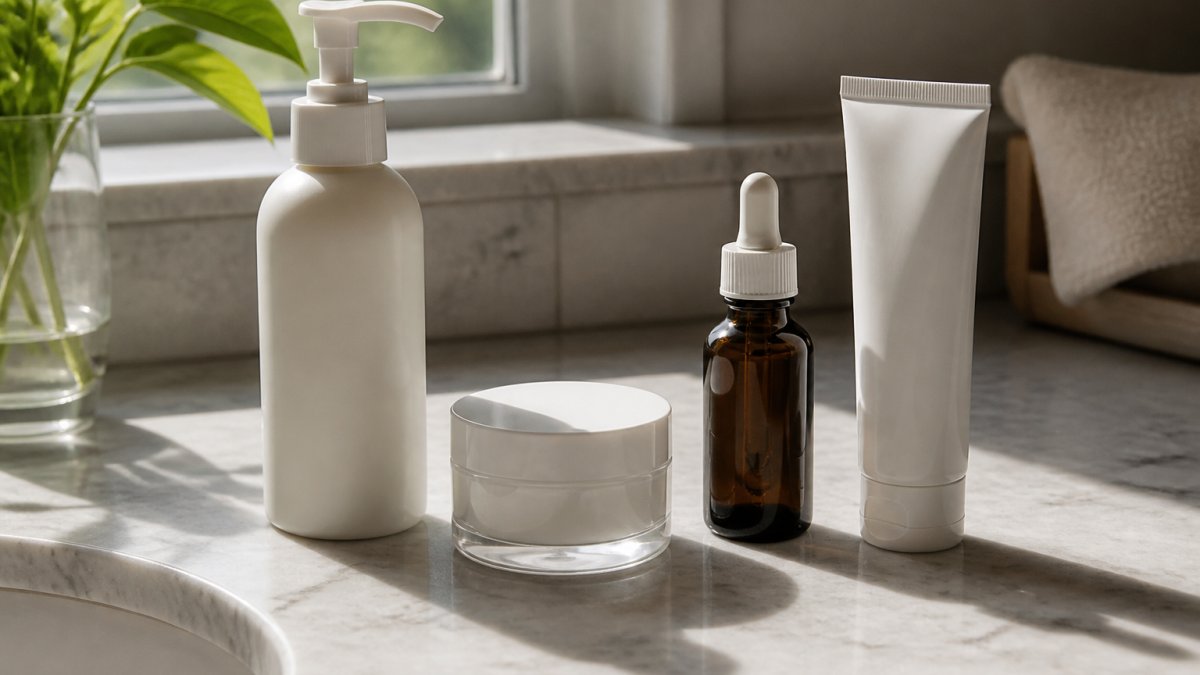
Start with these three essentials: a gentle cleanser, a moisturizer with ceramides or hyaluronic acid, and a broad-spectrum SPF 30+ sunscreen. Use this routine for 2-4 weeks to establish consistency and ensure your skin tolerates each product.
After your foundation is solid, add one active ingredient.
Once you're comfortable with one active, you can introduce a second, but never combine them in the same routine.
A complete beginner routine looks like this:
| Step | Morning | Evening |
|---|---|---|
| Cleanse | Gentle cleanser | Gentle cleanser |
| Hydrate | Hyaluronic acid serum | Hyaluronic acid serum (optional) |
| Treat | Vitamin C serum (2-3x weekly) | Retinol or AHA (2-3x weekly) |
| Moisturize | Ceramide moisturizer | Ceramide moisturizer |
| Protect | Broad-spectrum SPF 30+ | , |
The key to success is patience. Clinical skincare works, but it requires consistency.
At CanvasSkinLab, we believe clinical skincare should feel effortless, not overwhelming.
Building a clinical skincare routine as a beginner means understanding which ingredients actually work, how to use them safely, and when to introduce them. According to Journal of Cosmetic Dermatology research, cosmetic dermatologists consistently recommend these ingredients for fine lines, wrinkles, acne, and other common skin concerns.
Start simple, introduce actives gradually, and give your skin time to adapt. CanvasSkinLab offers a curated selection of clinical skincare essentials, all chosen for proven efficacy and compatibility. SHOP NOW and transform your skincare routine into a ritual that delivers real, visible results.
Frequently Asked Questions
Which skincare ingredients should beginners start with?
Beginners should start with the basics: a gentle cleanser, moisturizer with ceramides or hyaluronic acid, and a broad-spectrum sunscreen. Once your skin adjusts, add one active ingredient at a time, vitamin C serum or a mild retinol are excellent starting points. Introduce each new ingredient slowly over 4-6 weeks to monitor how your skin responds.
How do you introduce active ingredients into a skincare routine?
Start with the lowest concentration of any active ingredient and use it just 2-3 times per week. After 2-3 weeks, gradually increase frequency if your skin tolerates it well. Never layer multiple active ingredients (like retinol and AHA) on the same night, this risks irritation. Follow the 1% rule: introduce only one new ingredient at a time, waiting at least 4-6 weeks before adding another. This approach prevents overwhelming your skin barrier and helps you identify which ingredients work for you.
What does the 1% rule mean in skincare?
The 1% rule means introducing only one new skincare ingredient at a time and waiting 4-6 weeks before adding another. This allows you to observe how your skin reacts to each product individually. If irritation occurs, you'll know exactly which ingredient caused it. This method is essential for clinical skincare because active ingredients can interact unpredictably. Beginners who follow the 1% rule experience fewer adverse reactions and build routines that actually work for their skin type.
Can beginners use retinol and vitamin C together?
No, retinol and vitamin C should not be used on the same night. Both are potent active ingredients that can increase irritation, redness, and sensitivity when combined. Instead, use vitamin C in your morning routine and save retinol for evening. If you want to use both, apply them on alternate nights or on different days entirely. Many beginners find success using vitamin C during the day for antioxidant protection and retinol at night for skin renewal, keeping them on separate schedules.
How long should you try a skincare ingredient before judging results?
Give any new ingredient at least 6-8 weeks before deciding whether it works for your skin. Most active ingredients require this timeframe to show visible improvements in skin texture, tone, or specific concerns like acne or dark spots. Your skin barrier needs time to adjust, especially with exfoliating ingredients like AHAs and BHAs. If irritation develops within the first 2-3 weeks, stop immediately. However, mild initial dryness or slight redness often subsides as your skin adapts, patience is key to clinical skincare success.
What are common skincare ingredient mistakes beginners should avoid?
Beginners often introduce too many active ingredients at once, skip patch testing, or ignore their skin barrier. Avoid mixing incompatible ingredients like retinol with AHAs or vitamin C with niacinamide at high concentrations. Don't use active ingredients every single day, most need rest days. Skip products with high concentrations of fragrance or essential oils, which can irritate sensitive skin. Finally, never skip sunscreen when using exfoliating or renewing ingredients; these make your skin more sun-sensitive. Reading ingredient labels carefully prevents most of these mistakes.
How can you tell whether a skincare ingredient is suitable for your skin?
Start with patch testing: apply a small amount to your inner arm or behind your ear and wait 24-48 hours for any reaction. Then introduce the product to a small facial area for 1-2 weeks before full-face application. Consider your skin type and concerns, dry skin benefits from hyaluronic acid and ceramides, while oily or acne-prone skin may respond better to BHAs or niacinamide. Research the ingredient's concentration and pH if available, as these affect safety and efficacy. If you have sensitive skin, eczema, or are pregnant, consult a dermatologist before using potent actives like retinol or high-dose AHAs.
What makes a skincare product high-quality?
High-quality skincare products contain effective concentrations of active ingredients, stable formulations that preserve ingredient integrity, and clean ingredient lists without unnecessary fillers. Look for products with clinical backing, research showing the ingredient works at the stated concentration. Reputable brands disclose their ingredient percentages and pH levels. Packaging matters too: opaque, airless containers protect sensitive ingredients like vitamin C from degradation. CanvasSkinLab's thoughtfully curated selection emphasizes these quality markers, helping you invest in products that deliver real results rather than marketing promises.