Article: Affordable Luxury Skincare for Busy Professionals
Affordable Luxury Skincare for Busy Professionals
Table of Contents
- Why Affordable Luxury Skincare Works for Busy Professionals
- Best Affordable Skincare Products That Deliver Results
- Quick Morning Skincare Routine for Busy Professionals
- Simple Skincare Routine for Busy Professionals
- Skincare Products Worth the Splurge
- Building Your Skincare Routine Without Breaking the Budget
- Frequently Asked Questions
Last Updated: October 21, 2026
Why Affordable Luxury Skincare Works for Busy Professionals
The skincare industry has shifted dramatically. High-end doesn't always mean better results anymore. Busy professionals increasingly reject the false choice between budget drugstore products and luxury skincare that costs hundreds per bottle.
Here's what matters: effective skincare comes down to active ingredients, formulation quality, and consistency. A $40 serum with proven ingredients often outperforms a $200 version that relies on brand prestige. For professionals juggling demanding schedules, this shift opens doors.
The best affordable luxury skincare for busy professionals balances three things: proven efficacy, reasonable pricing, and simplicity. When your morning starts at 5 a.m. and your evening ends at 11 p.m., a 12-step routine isn't realistic. But a simplified routine using thoughtfully formulated products? That's sustainable. That's what actually transforms your skin.
Best Affordable Skincare Products That Deliver Results
Competitors list categories. This section lists actual picks with prices, key actives, and cost-per-use math, so you can judge affordability instead of guessing. Every product below is widely available at mass and specialty retailers, and every price is a typical U.S. retail figure, sales and subscription discounts will move them, so verify at checkout.
Cleansers and Face Washes
A cleanser's job is to remove sunscreen, makeup, and sebum without stripping the barrier. You do not need to spend much here, surfactant chemistry is inexpensive, and the difference between a $12 and a $60 cleanser is mostly texture and fragrance, not cleansing power.
- CeraVe Hydrating Facial Cleanser (16 oz, about $16), ceramides plus glycerin, non-foaming, best for dry and sensitive skin. At twice-daily use a bottle lasts roughly 4 months, or about $4/month.
- La Roche-Posay Toleriane Purifying Foaming Cleanser (13.5 oz, about $17), niacinamide and ceramides in a gel-to-foam base for oily and combination skin; roughly $5/month.
- Vanicream Gentle Facial Cleanser (8 oz, about $11), the fragrance-free, dye-free option dermatologists reach for when skin is reactive; about $4/month.
- Paula's Choice RESIST Perfectly Balanced Foaming Cleanser (6.4 oz, about $22), the pricier end of "affordable luxury," with a cushiony texture and no fragrance; about $7/month.
Skip micellar water as a primary cleanse unless you double-cleanse; it is a makeup remover, not a full cleanser.
Moisturizers and Serums
Moisturizers are commodity chemistry, humectants (glycerin, hyaluronic acid), emollients, and occlusives, and the affordable tier formulates them well. Serums are where concentration and stability start to matter, so this is the one category where a modest step up in price is usually justified.
- CeraVe Moisturizing Cream (19 oz, about $19), ceramides, hyaluronic acid, petrolatum; the value benchmark for dry skin at roughly $3/month.
- Vanicream Moisturizing Cream (16 oz, about $15), minimal ingredient list, excellent for sensitive and eczema-prone skin.
- The Ordinary Natural Moisturizing Factors + HA (3.4 oz, about $9), lightweight, amino-acid-rich, good for oily and combination skin.
- La Roche-Posay Toleriane Double Repair Face Moisturizer (3.4 oz, about $22), ceramides plus niacinamide, a strong mid-tier pick for barrier support.
- The Ordinary Niacinamide 10% + Zinc 1% (1 oz, about $6), pore refinement and oil control at a cost per use of pennies.
- Timeless 20% Vitamin C + E Ferulic Acid Serum (1 oz, about $28), a well-known affordable analog to far pricier vitamin C serums; roughly $9/month at 4-5 drops daily.
Layering order: serum on clean, slightly damp skin, then moisturizer to seal it. Most people see texture and tone changes in 4-6 weeks of consistent use, not because the products are magic, but because consistency is what actually moves the needle.
Targeted Treatments and Active Ingredients
Treatments are where you concentrate budget. Buy one, use it correctly, and do not stack three actives at once.
- Retinol: The Ordinary Retinol 0.5% in Squalane (1 oz, about $10) is a low-cost entry point; La Roche-Posay Effaclar Adapalene Gel 0.1% (about $16, now available without a prescription) is a proven, stable retinoid for acne and texture. Use at night only.
- Vitamin C: The Timeless serum above, or Paula's Choice C15 Super Booster (about $52) if you want a more stabilized, cosmetically elegant formula. Morning use, under sunscreen.
- Salicylic acid: Paula's Choice 2% BHA Liquid Exfoliant (4 oz, about $35) is the category standard; The Ordinary Salicylic Acid 2% Solution (1 oz, about $6) is the budget alternative. Two to three nights a week is enough.
- Azelaic acid: The Ordinary Azelaic Acid Suspension 10% (1 oz, about $10) for redness and post-acne marks; gentle enough for most sensitive skin.
Cost-per-use reality check
A complete five-step routine built from the picks above, cleanser, one serum, moisturizer, one treatment, sunscreen, lands at roughly $35-$55 per month at typical usage. That is the number to compare against a single $150 prestige serum, which often costs more per month than this entire routine.
Quick Morning Skincare Routine for Busy Professionals
Your morning routine should take five minutes or less. Here's the framework: cleanse, treat, hydrate, protect.
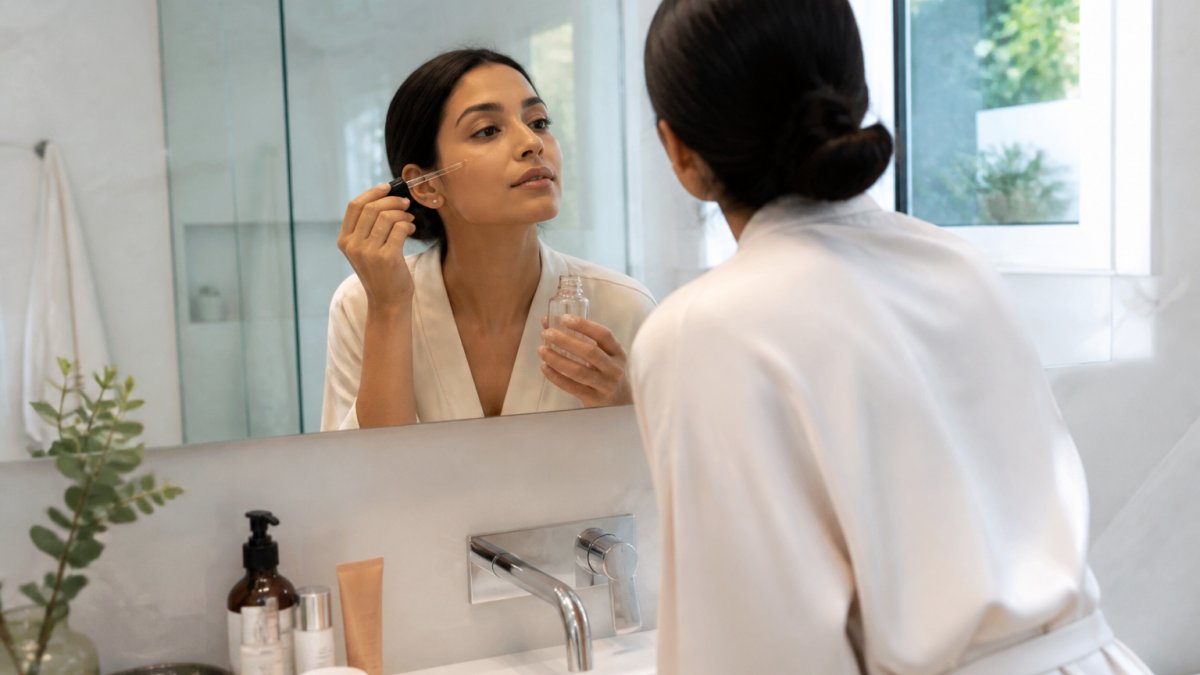
Start with a gentle cleanser that removes overnight oil without harsh scrubbing. Pat skin dry, don't rub. Apply a lightweight serum or treatment product if your routine includes one. Follow immediately with moisturizer while skin is still slightly damp.
This sequence takes roughly 4-5 minutes. The entire routine fits into the time you'd spend scrolling email. Consistency matters infinitely more than complexity. A simple routine you'll actually follow every single day beats an elaborate one you skip on busy mornings.
Simple Skincare Routine for Busy Professionals
Nighttime Routine Essentials
Your evening routine is where the real work happens. Skin repairs itself at night, so this is when active ingredients deliver maximum benefit. Cleanse thoroughly, makeup, sunscreen, and daily grime need complete removal. Use the same cleanser as morning or switch to a slightly richer formula if your skin tends toward dryness.
Follow with a targeted treatment. This is where retinol, vitamin C, or other active ingredients shine. Apply to clean, dry skin. Wait 20 seconds before adding moisturizer to allow the treatment to absorb.
Many professionals add an eye balm or targeted under-eye treatment here. The skin around your eyes is thinner and more delicate, so it benefits from dedicated attention. This step takes two minutes and addresses fine lines, dark circles, and puffiness.
Customizing for Your Skin Type
Oily skin benefits from lightweight, gel-based moisturizers and targeted treatments that won't clog pores. Skip heavy creams. Focus on balancing hydration without excess oil.
Dry skin needs richer formulations. Add an extra hydrating layer, perhaps a hydrating toner between cleansing and serum. Use creamier moisturizers and consider facial oils for additional nourishment.
Combination skin requires a balanced approach. Use different products for different zones if necessary. A lightweight serum works everywhere, but your moisturizer might be lighter on the T-zone and richer on cheeks.
Sensitive skin demands gentle, minimal routines. Fewer active ingredients mean less irritation risk. Focus on barrier support with ceramides and calming ingredients like centella asiatica or chamomile. Introduce new products one at a time, spacing them two weeks apart to identify any reactions.
Skincare Products Worth the Splurge
When to Invest in Premium Formulas
Some products justify premium pricing. Retinol serums, vitamin C treatments, and peptide-rich formulas warrant investment because they're more concentrated and more stable. A high-quality retinol costs more because the ingredient is expensive and requires careful formulation to remain effective. A high-quality retinol serum can be a worthwhile investment.
Eye treatments are worth the investment. The eye area needs gentler, more sophisticated formulations because skin there is so delicate. Premium eye balms contain higher concentrations of active ingredients and more stable delivery systems.
Sunscreen deserves investment. Daily sun protection prevents 80% of visible aging. A quality formula that you'll actually reapply makes the difference between preventing and accelerating damage.
Luxury Alternatives to High-End Products
Many luxury skincare lines charge premium prices for packaging and brand prestige rather than superior formulations. The active ingredients, retinol, vitamin C, hyaluronic acid, peptides, cost roughly the same whether they're in a $50 product or a $200 one.
Research the actual ingredient list. Compare formulations side by side. A retinol serum with a specific concentration of retinol can deliver similar active ingredients across different price points. The difference lies in texture, packaging, and brand positioning, not efficacy.
For busy professionals, this reality is liberating. You can build a high-performing routine using affordable luxury skincare products that cost a fraction of prestige brands. CanvasSkinLab's thoughtfully curated selection focuses on this exact intersection: products with proven active ingredients at accessible price points.
Building Your Skincare Routine Without Breaking the Budget
Cost Per Use and Monthly Budget Planning
Calculate cost per use to understand real value. Calculating cost per use can help you understand real value. A complete routine can be built strategically to fit your budget.
Budget-conscious professionals can build an effective routine. Prioritize the products that deliver the most visible results: a good cleanser, a hydrating moisturizer, sunscreen, and one targeted treatment addressing your primary skin concern.
Many find that investing slightly more in one product, perhaps a higher-quality retinol or vitamin C serum, while keeping other products affordable creates the best balance. You're not spreading budget thin across mediocre products; you're prioritizing impact.
Flexible Payment Options for Quality Products
CanvasSkinLab offers interest-free installment payment options for orders over $35, which removes the barrier to investing in quality skincare.
Many professionals use installment options to invest in higher-quality serums or treatments they'd otherwise skip.
Building affordable luxury skincare for busy professionals means rejecting the premise that you must choose between results and budget.
At CanvasSkinLab, we've built our curated selection around this principle: high-quality skincare that fits your schedule and your budget.
Start with the basics, a good cleanser, moisturizer, and sunscreen, then add one targeted treatment matching your primary skin concern. Give it six weeks. Track what changes.
Ready to transform your routine? CanvasSkinLab offers a curated selection of skincare essentials designed for professionals like you.
Frequently Asked Questions
What is the best affordable luxury skincare for busy professionals?
The best affordable luxury skincare combines effective active ingredients, clean formulations, and realistic price points. Look for products that address your specific skin concerns, whether that's hydration, fine lines, or firmness, without requiring a complex multi-step routine. Focus on essentials: a good cleanser, moisturizer, and one targeted treatment. Many drugstore and mid-range brands now match the efficacy of high-end formulas, making it possible to build a luxury-feeling routine without the premium price tag. CanvasSkinLab's curated selection helps you find products that work for your skin type and schedule.
How can I build a simple skincare routine when I have a busy schedule?
Start with three non-negotiable steps: cleanse, moisturize, and protect. In the morning, use a gentle face wash, apply moisturizer with SPF, and you're done. At night, cleanse again and apply a richer night cream or targeted treatment. This stripped-down routine takes under five minutes and addresses your skin barrier, hydration, and sun protection. If you have specific concerns like acne or aging, add one active ingredient serum to either morning or evening. The key is consistency over complexity, a simple routine you'll actually follow beats an elaborate one you abandon.
Which skincare products are worth spending more on?
Invest in products that directly contact your skin barrier and address your primary concern. Serums with proven active ingredients like retinol, niacinamide, or hyaluronic acid can be a worthwhile investment because concentration and formulation matter. Eye balms and targeted treatments for fine lines or firmness can also benefit from higher-end formulas. Conversely, cleansers rinse off quickly, so affordable options can work well. Moisturizers sit on skin longer, some options may perform better. Sunscreen is critical. Prioritize investments on treatments and moisturizers; more affordable options can be found for cleansers.
Can affordable skincare work as well as luxury skincare?
Yes, when you focus on active ingredients and formulation rather than brand name. Many affordable skincare products contain the same humectants, surfactants, and active ingredients as luxury alternatives. The difference often comes down to packaging, marketing, and product texture rather than efficacy. Drugstore and mid-range brands have improved significantly, with many offering clinically tested formulas that deliver real results for hydration, anti-aging, and skin texture. The best approach is to match products to your skin concerns and budget, then give them time to work, most skincare shows results after 4-6 weeks of consistent use.