How to Vet Skincare Product Ingredients
Table of Contents
- Why Vetting Skincare Ingredients Matters
- Step 1: How to Read Skincare Ingredient Labels
- Step 2: Identify Active Ingredients and Their Function
- Step 3: Match Ingredients to What Skincare Ingredients Work for Your Skin Type
- Step 4: Use a Skincare Ingredient Checker to Verify Claims
- Step 5: Identify Skincare Ingredients to Avoid or Use Cautiously
- Step 6: Perform a Patch Test Before Full Use
- Common Mistakes When Vetting Skincare Ingredients
- Frequently Asked Questions
Last Updated: October 14, 2026
Why Vetting Skincare Ingredients Matters
Before buying a skincare product, know what's actually in it. Some products contain useless fillers or ingredients that irritate your skin.
Learning how to vet skincare product ingredients gives you control over what touches your face, so you stop relying on marketing claims. Your skin is unique, what works for a friend might cause problems for you.
The steps below show you how to evaluate any product before you use it.
Step 1: How to Read Skincare Ingredient Labels
The ingredient list tells you everything about a product, but the format confuses most people. Labels use INCI names, scientific terms like "Aqua" for water and "Glycerin" for a humectant.
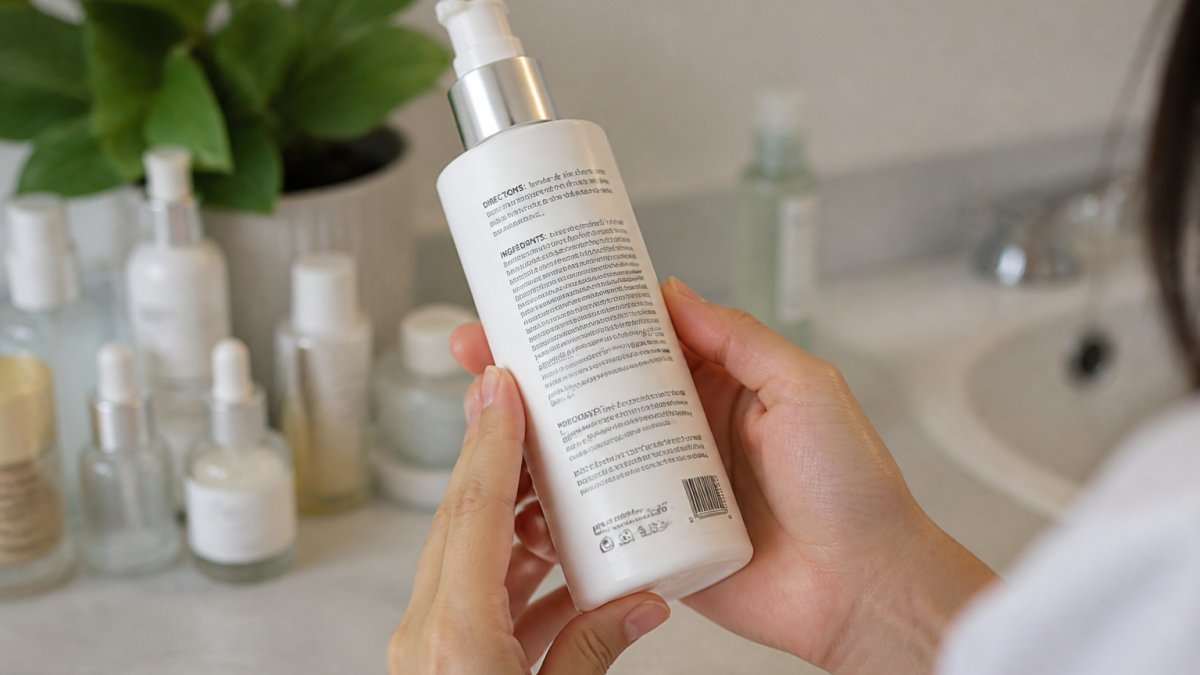
Find the ingredient list on the back of the product. In the United States, skincare ingredients must be listed by weight, from highest to lowest concentration.
Understanding ingredient order and concentration
The order matters. If an active ingredient appears near the end of the list, the product contains very little of it.
Look at the first five ingredients, they make up the bulk of the formula.
Concentration also explains why some products feel different. Two serums might both contain vitamin C, but one lists it fifth and the other tenth, the first is much stronger.
Pay attention to where preservatives appear. They usually show up near the end because only a small amount keeps the product safe.
Decoding INCI names and label claims
INCI stands for International Nomenclature of Cosmetic Ingredients, the official naming system used worldwide. "Sodium Benzoate" is a preservative; "Tocopherol" is vitamin E.
The INCI name tells you more than the marketing name. A product might call something "plant extract complex," but the INCI name reveals exactly which plants and in what form.
Claims on the front of the bottle are marketing; the ingredient list is fact. A product might say "hydrating," but if the list shows mostly alcohol, it's actually drying. Trust the ingredient list over packaging claims.
Step 2: Identify Active Ingredients and Their Function
Active ingredients actually change your skin, unlike base ingredients like water or glycerin. Actives do the work; everything else is filler or preservative.
Finding active ingredients requires knowing what to look for. Retinol, niacinamide, hyaluronic acid, and salicylic acid all have proven effects on skin, while base ingredients like glycerin and cetyl alcohol support the formula but don't treat concerns.
Common active ingredients and what they do
Retinol reduces fine lines and improves texture by speeding up cell turnover. It's listed as "Retinol" or "Retinyl Palmitate."
Niacinamide (Vitamin B3) strengthens your skin barrier and reduces redness. Listed simply as "Niacinamide," it's gentle and suits most skin types including sensitive skin.
Hyaluronic acid holds water in your skin, making it plump and hydrated. It is listed as "Sodium Hyaluronate" in most formulas.
Salicylic acid, a beta-hydroxy acid, exfoliates inside your pores by dissolving oil and dead skin cells. It is best for oily and acne-prone skin.
Alpha-hydroxy acids (AHAs) like glycolic acid exfoliate the surface, removing dead skin cells and improving texture. They suit dry and mature skin.
Assessing ingredient efficacy and evidence quality
Not all active ingredients have the same research behind them, some have decades of studies, others minimal testing.
Retinol, vitamin C, and niacinamide have strong scientific evidence.
Some ingredients have weaker evidence. "Peptides" and "plant extracts" sound good, but many lack rigorous testing, they might help, but the proof isn't as solid.
Look for ingredients listed higher in the formula. A product with vitamin C listed tenth has very little active ingredient. A well-formulated product puts actives in meaningful amounts.
Step 3: Match Ingredients to What Skincare Ingredients Work for Your Skin Type
Not every ingredient works for every skin type. Most people buy products based on reviews without checking if the formula matches their skin.
Your skin type determines which ingredients help and which cause problems: oily skin needs different ingredients than dry skin, and sensitive skin requires gentler actives.
Oily and acne-prone skin
If your skin is oily, you need lightweight ingredients that won't clog pores. Salicylic acid exfoliates inside pores and removes excess oil, and niacinamide can help regulate sebum production.
Avoid heavy oils and rich butters; choose water-based serums instead. Glycerin and hyaluronic acid hydrate without adding oil.
Acne-prone skin benefits from antibacterial ingredients: salicylic acid, benzoyl peroxide, and azelaic acid all fight acne-causing bacteria.
Dry and sensitive skin
Dry skin needs humectants and occlusives. Humectants like glycerin and hyaluronic acid draw water into your skin; occlusives like oils and butters can help seal that moisture in.
Sensitive skin requires gentle ingredients. Avoid strong exfoliants like salicylic acid and AHAs; use azelaic acid or niacinamide instead. Ceramides and centella asiatica can help soothe and repair your skin barrier.
Avoid fragrance and essential oils if you have sensitive skin, they often cause irritation and redness. Stick with proven, gentle actives.
Combination and mature skin
Combination skin needs balance: your T-zone might be oily and need salicylic acid, while your cheeks might be dry and need rich moisturizers.
Mature skin benefits from ingredients addressing multiple concerns: retinol reduces wrinkles, vitamin C brightens and protects, and peptides can support collagen.
Mature skin also needs strong sun protection. UV damage causes wrinkles and age spots. Use SPF 30 or higher daily to prevent further damage.
Step 4: Use a Skincare Ingredient Checker to Verify Claims
Ingredient checker tools analyze formulas and flag potential problems. They're helpful starting points but have limits.
These tools compare ingredient lists against databases of known substances, identifying actives, preservatives, and potential irritants. Some rate ingredients on a safety scale.
How ingredient checker tools work
Most tools work the same way: you enter the product name or paste the ingredient list, and the tool matches each ingredient against its database, highlighting actives, flagging irritants, and giving a safety rating.
The tool shows which ingredients might cause sensitivity, useful if you have known allergies, so you can avoid those products before buying.
Some tools let you compare products side by side, showing which has more active ingredients or fewer potential irritants.
Limitations and accuracy considerations
Ingredient checkers aren't perfect. Their databases aren't always current, and some tools use outdated safety information.
A tool might flag an ingredient as unsafe when it's actually fine, because safety depends on concentration: something that irritates at 10 percent might be fine at 0.5 percent.
Different tools give different ratings for the same product, one might call it safe, another risky, because they use different safety standards.
Use these tools to learn, not to make final decisions. They help identify what's in a product but can't replace your own research and skin testing.
Step 5: Identify Skincare Ingredients to Avoid or Use Cautiously
Some ingredients cause problems for many people; others are safe but may irritate sensitive skin.
The ingredient to avoid depends on your skin type: someone with eczema might avoid fragrance, someone with acne might avoid heavy oils. There's no universal "bad" ingredient.
Common irritants and allergens
Fragrance is the most common irritant, including essential oils and synthetic fragrances. It can cause redness, itching, and burning.
Alcohol denat (denatured alcohol) can be very drying. It appears high in some toners and astringents. Small amounts are fine.
Essential oils like lavender and tea tree sound natural and safe. These oils can irritate skin and may cause allergic reactions.
Parabens are preservatives some people react to, though they're safe for most. If you're sensitive, test products with parabens on a small area first.
Sulfates are harsh cleansing agents that strip oils and can cause dryness. Look for sulfate-free options if you have dry or sensitive skin.
Concentration matters: when a safe ingredient becomes problematic
An ingredient that's safe at one concentration can irritate at another. Salicylic acid at 0.5 percent is gentle; at 2 percent, it's strong and can cause irritation.
Retinol at low concentrations is gentle; high concentrations can cause redness and peeling.
Vitamin C is beneficial but unstable.
Check the ingredient list to estimate concentration: if an irritating ingredient appears near the top, the concentration is high; near the bottom, the amount is small.
Step 6: Perform a Patch Test Before Full Use
Before using a new product on your face, patch test it on a small area. It takes two minutes and prevents full-face reactions.
Choose a small area behind your ear or on your inner arm, apply a tiny amount, and wait 24 hours.
Some reactions take longer to develop, so use the product on your test area for three to five days before applying it to your full face.
If irritation appears during the patch test, stop using the product. Wash the area with gentle cleanser and water. Apply a soothing moisturizer.
This simple step prevents wasted products and painful reactions, especially if you have sensitive skin or are trying a new active.
Common Mistakes When Vetting Skincare Ingredients
Most people make the same errors when evaluating skincare products.
The biggest mistake is trusting marketing over ingredients. A product might say "natural" or "clean," but the ingredient list tells the real story.
Another common error is buying too many actives at once. Using them together overwhelms your skin.
Many people ignore concentration, buying products with "good" ingredients listed at the very end, these contain barely any active ingredient.
Some people assume expensive means better. Price doesn't always reflect quality.
Skipping the patch test is another mistake. People want fast results and skip testing, leading to bad reactions that set back their routine weeks.
| Mistake | Why It Happens | How to Avoid It |
|---|---|---|
| Trusting marketing claims | Packaging is designed to persuade | Read the ingredient list instead |
| Adding too many actives | Excitement about new products | Introduce one ingredient at a time |
| Ignoring ingredient order | Unfamiliar with INCI names | Check where actives appear in the list |
| Assuming expensive is better | Higher price seems like quality | Judge formulas, not price tags |
| Skipping patch tests | Wanting fast results | Always test new products first |
Learning how to vet skincare product ingredients transforms how you shop. Start with these steps the next time you're evaluating a product. The FDA provides guidance on cosmetic ingredient safety to help you understand regulatory standards.
Frequently Asked Questions
How do I read the ingredient list on a skincare product?
Ingredient lists are ordered by concentration, from highest to lowest. The first five ingredients make up the bulk of the formula. Look for the INCI (International Nomenclature of Cosmetic Ingredients) name, which is the official chemical or botanical name. Water is often listed first as the base. Active ingredients, like retinol, niacinamide, or hyaluronic acid, may appear lower on the list but still deliver benefits. Check the back label for usage instructions and any warnings.
What are the top 5 ingredients to avoid in skincare products?
Common irritants include parabens (preservatives), sulfates (harsh cleansing agents), fragrance (synthetic or natural), phthalates (plasticizers), and mineral oil. However, 'avoid' depends on your skin type and sensitivities. Someone with resilient skin may tolerate these; those with sensitive skin should test first. Always patch test new products, especially if you have a history of irritation or allergies.
Is there an app that scans skincare ingredients?
Yes, several ingredient checker tools and apps allow you to paste an ingredient list or upload a photo of the label. They provide ingredient breakdowns, flag potential irritants, and explain functions. However, these tools have limitations: databases may be incomplete, safety ratings vary by source, and they cannot replace professional dermatology advice. Use them as a starting point, not the final word. Cross-reference results and consider your own skin history and sensitivities.
How can I tell whether a skincare ingredient is effective?
Look for ingredients with clinical research backing their claims. Established actives like retinol (vitamin A), vitamin C, niacinamide, and alpha-hydroxy acids have peer-reviewed studies. Check the ingredient's position in the list, actives listed in the top 10 are present in meaningful amounts. Consider concentration: some ingredients need 3-5% to be effective. Be skeptical of single-ingredient solutions. If marketing claims lack specifics (like 'clinically proven' without a study cited), verify independently.